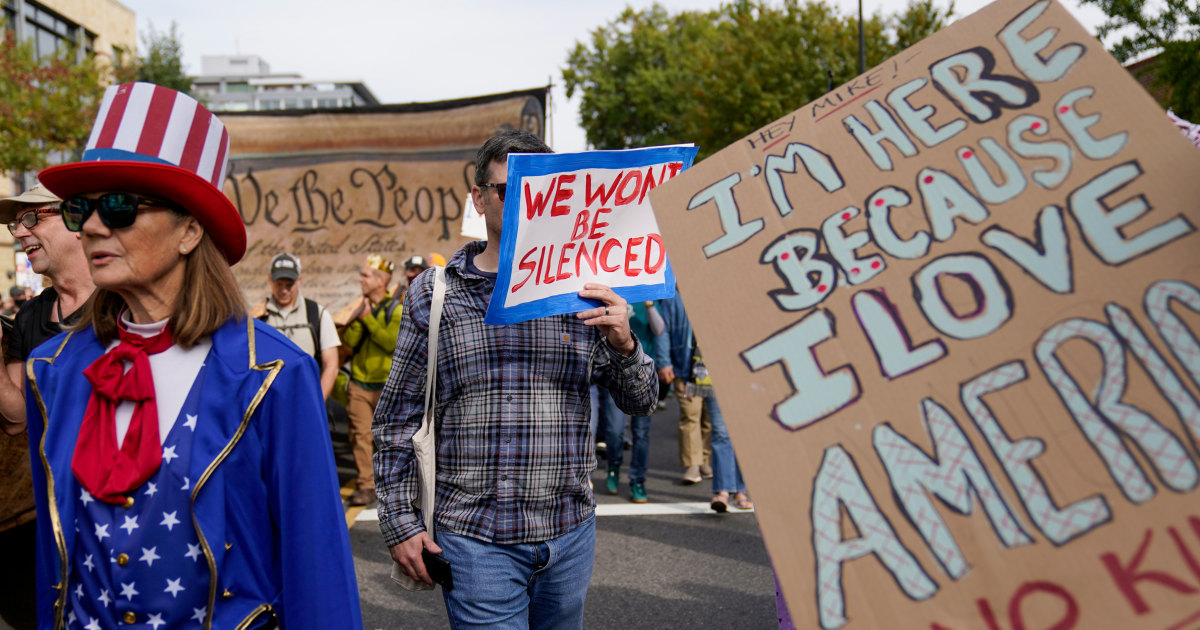
Antifa Clashes at Broadview ICE During Chicago No Kings Rally: A Deep Dive into a Day of Protest
A day intended to voice strong opposition to federal immigration policies and the Trump administration's practices culminated in a dramatic and forceful confrontation outside the Immigration and Customs Enforcement (ICE) processing center in Broadview, Illinois. What began as a massive, organized demonstration known as the
Chicago No Kings Protest, drawing thousands to the city's downtown, ultimately escalated into a standoff involving radical elements like Antifa and state and county law enforcement, defining a complex and contentious chapter in Chicago's history of activism.
The Genesis of the "No Kings" Movement in Chicago
The events of that pivotal Saturday unfolded against a backdrop of nationwide "No Kings" rallies, a series of demonstrations designed to challenge what organizers perceived as increasingly authoritarian practices by the then-President Donald Trump's administration. In Chicago, the "Hands off Chicago" rally, as it was also known, kicked off around noon in Grant Park, drawing a diverse crowd eager to make their voices heard. Footage from above, including that captured by news helicopters, showcased the sheer scale of the gathering, with thousands packing the iconic urban green space.
The dominant theme echoing through the speeches and chants was a fervent opposition to immigration law enforcement. Speakers from groups like The Immigration Project articulated the profound human cost of these policies. One particularly poignant speaker highlighted the immediate and devastating impact on families, stating, “Our dads and grandpas are being kidnapped for going to work to build American homes. Our moms are being kidnapped when they go to the grocery store.” The sentiment conveyed was one of deep distress and fear: “This has been the most horrific month of our lives.” This powerful rhetoric aimed to humanize the often-abstract debate surrounding immigration, bringing to the forefront the lived experiences of those affected by deportations and detentions.
Among the thousands present was Israel Hernandez, who articulated a common motivation for many attendees: “One of the main reasons why I’m here for people who don’t have a voice, and they’re always afraid.” This speaks to the protective impulse driving many participants, stepping forward on behalf of vulnerable communities. The march through downtown Chicago saw protestors move along prominent routes like Michigan Avenue, even passing near Trump Tower, a symbolic target for many expressing anti-administration sentiments.
Political Voices Join the Fray: Mayor Johnson and Governor Pritzker
Adding significant weight and political endorsement to the
Chicago No Kings Protest were the appearances of high-profile elected officials. Chicago Mayor Brandon Johnson addressed the teeming crowd, his speech imbued with strong, often incendiary, rhetoric. Mayor Johnson accused President Trump and his administration of having "declared war on Chicago and cities across this country," a statement that immediately ratcheted up the perceived stakes of the protest. He went further, urging attendees to “fight fascism,” framing the movement as a battle against authoritarianism. Perhaps most controversally, Mayor Johnson suggested, “They have clearly decided they want a rematch of the Civil War,” a powerful and provocative claim that underscored the deep political divisions animating the demonstration.
Illinois Governor JB Pritzker also lent his presence and leadership to the event. He was seen leading marchers as they departed Grant Park, guiding the procession as it merged with other protest groups. The participation of both the city's mayor and the state's governor provided a considerable boost to the legitimacy and visibility of the protest, signaling that the concerns raised were not just grassroots but also resonated at the highest levels of local and state government. Their involvement undoubtedly amplified the message of opposition to federal immigration policies and added a layer of political gravitas to the "No Kings" rally. It also raised questions for some observers about the appropriateness of elected officials participating in, and in some cases, inflaming, protests that could potentially lead to confrontations.
Escalation at Broadview: Antifa, Curfews, and Confrontation
As the afternoon wore on, the collective energy of the multiple protest groups coalesced, eventually forming a significant presence outside the Immigration and Customs Enforcement (ICE) processing center in Broadview, a suburban area just outside Chicago. This facility has been a frequent target for "open borders agitators," particularly since the launch of "Operation Midway Blitz," an enforcement initiative that has led to increased immigration-related arrests in the region. The presence of such a large, agitated crowd at the Broadview ICE facility signaled an imminent escalation.
The atmosphere turned tense as a 6 p.m. curfew approached. Law enforcement issued orders for the crowd to vacate the area, a standard procedure when protests risk becoming unlawful assemblies or safety concerns arise. However, these orders were met with defiance by a faction of the protestors, notably individuals identified as Antifa and other militants. These groups chose to remain, openly challenging the directives from authorities.
This refusal to disperse prompted a decisive response from county and state law enforcement. Officers moved in to forcefully drive the defiant mob away from the facility. The scenes that followed were marked by direct confrontation, with authorities working to establish order and secure the area around the federal building. While the exact details of the tactics used by law enforcement varied, the outcome was clear: a forceful dispersal to ensure compliance with the curfew and to prevent further escalation or potential damage to the facility. The clashes at Broadview underscored the volatile line between peaceful protest and unlawful assembly, highlighting the challenges faced by both protestors pushing boundaries and law enforcement tasked with maintaining public order and protecting federal property. Such confrontations often carry legal repercussions for participants and significantly shape public perception of protest movements.
Understanding the Dynamics of Civil Disobedience and Confrontation
The events at Broadview serve as a stark reminder of the complex dynamics inherent in large-scale protests, particularly those involving civil disobedience and more radical elements. While the core "Chicago No Kings Protest" began with a clear message and broad participation, the actions of groups like Antifa often shift the narrative. Antifa, or "anti-fascist action," typically employs direct action and confrontational tactics, believing that such methods are necessary to resist what they perceive as oppressive or fascist regimes. Their presence and defiance of authority figures at Broadview introduced an element of intended confrontation that diverged from the broader, often more peaceful, demonstrations earlier in the day.
For law enforcement, managing such situations is a delicate balancing act. They are tasked with protecting property, ensuring public safety, and upholding the law, often under intense public scrutiny. The decision to enforce a curfew and forcefully disperse a crowd is never taken lightly, as it carries risks for both officers and protestors. It often becomes necessary when safety is compromised, or when a protest crosses the line into an unlawful assembly, potentially leading to property damage or direct threats to personnel within a federal facility.
Understanding these dynamics is crucial for anyone analyzing protest movements. While peaceful assembly is a cornerstone of democratic societies, the boundaries of such assemblies are often tested, leading to moments of tension and conflict. The Broadview incident highlights how diverse motivations and tactics within a single protest can lead to vastly different outcomes, from mass peaceful marches to direct confrontations with law enforcement. It also underscores the importance of clear communication from both protest organizers and authorities, though such clarity can be difficult to maintain in highly charged environments.
Conclusion
The "Antifa Clashes at Broadview ICE During Chicago No Kings Rally" represents a multifaceted event that encapsulated the fervor, political divisions, and confrontational potential of modern protest movements. From the thousands who gathered in Grant Park under the banner of the Chicago No Kings Protest, energized by strong political endorsements from Mayor Johnson and Governor Pritzker, to the tense standoff at the Broadview ICE facility, the day was a powerful testament to the ongoing debate surrounding immigration policy and civil liberties in America. The convergence of varied protest groups, the direct challenge to federal authority by militant elements, and the eventual forceful intervention by law enforcement painted a vivid picture of the complexities inherent in public demonstrations. Ultimately, the events in Chicago serve as a critical case study in how large-scale protests, driven by deep-seated societal issues, can evolve and sometimes erupt into direct conflict, leaving a lasting imprint on both participants and the wider community.